
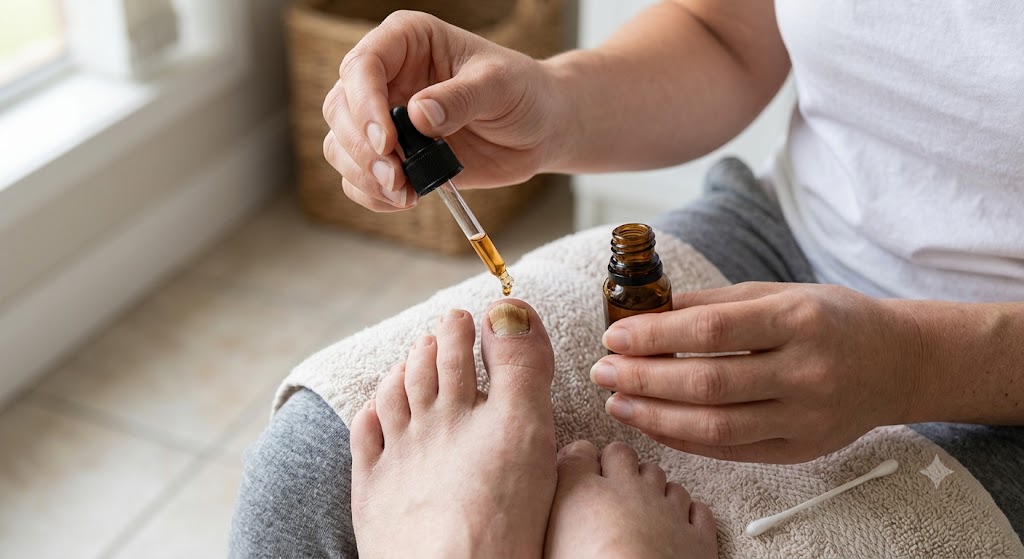
How to Use Tea Tree Oil for Nail Fungus (Does It Really Work?)
If you’ve been searching for a natural way to treat nail fungus, you’ve probably come across tea tree oil. It’s often praised for its antifungal and antibacterial properties, and many people swear by it as a home remedy for yellow, thick, or brittle nails.
But does tea tree oil kill nail fungus, or is it just another internet myth?
The answer isn’t a simple yes or no. Research shows that tea tree oil contains compounds that can fight fungi in laboratory settings. However, nail fungus is notoriously difficult to treat because the infection lives beneath the nail, where topical products have a hard time reaching it.
In this guide, you’ll learn how to use tea tree oil for nail fungus, what science says about its effectiveness, how long it takes to see results, and the best practices for improving your chances of success.
Does Tea Tree Oil Kill Nail Fungus?
The honest answer is yes—but only to a certain extent.
Laboratory studies have shown that tea tree oil can kill or slow the growth of fungi commonly responsible for nail infections, especially Trichophyton rubrum, which causes most cases of toenail fungus.
However, treating nail fungus in real life is much more difficult than treating fungi in a laboratory.
The fungus grows underneath the nail plate, making it difficult for topical oils to penetrate deeply enough to eliminate the infection completely. This is why even prescription nail lacquers often struggle to cure moderate or severe infections.
Several clinical studies have found that tea tree oil may improve the appearance of infected nails, but complete cures are relatively uncommon. In one well-known study, pure tea tree oil performed similarly to clotrimazole solution, yet only a small percentage of participants achieved complete fungal clearance after six months.
So, is tea tree oil good for nail fungus?
Yes—if:
- The infection is mild.
- Only one nail is affected.
- You’re willing to apply it consistently for several months.
- You understand that improvement is more likely than a complete cure.
For advanced infections, tea tree oil usually works best as a supportive treatment rather than a replacement for prescription medication.
Benefits of Tea Tree Oil for Nail Fungus

Although it’s not a guaranteed cure, tea tree oil may offer several benefits:
- Helps slow fungal growth.
- May improve nail color and appearance.
- Can reduce odor caused by fungal infections.
- Has natural antibacterial properties that may help prevent secondary bacterial infections.
- Easy to apply at home.
- Affordable compared to many prescription treatments.
Many people also appreciate that it’s a natural option with relatively few side effects when used correctly.
How to Use Tea Tree Oil for Nail Fungus
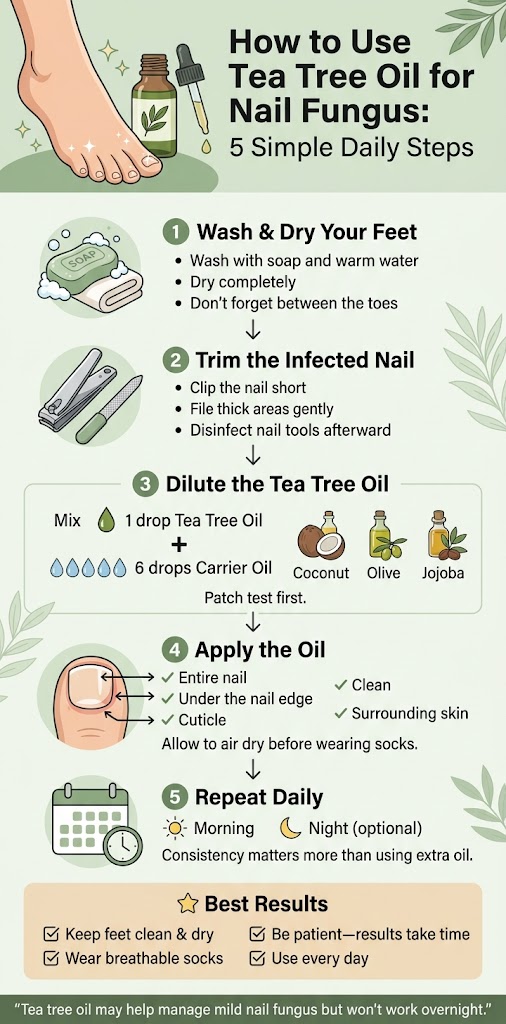
Consistency is far more important than using large amounts of oil. Follow these steps carefully.
Step 1: Wash Your Feet
Clean your feet with soap and warm water to remove dirt, sweat, and oils.
Dry them thoroughly, especially between the toes. Fungus thrives in moist environments.
Step 2: Trim the Nail
Clip the infected nail as short as comfortably possible.
If the nail is thick, gently file the surface to remove some of the hardened layers. This helps the oil reach deeper into the nail.
Remember to disinfect your nail tools after each use to avoid spreading the fungus.
Step 3: Dilute the Tea Tree Oil
Pure tea tree oil can irritate sensitive skin.
A good starting ratio is:
- 1 drop tea tree oil
- 6 drops carrier oil (such as coconut oil, olive oil, or jojoba oil)
If your skin tolerates it well, some people choose to use undiluted tea tree oil directly on the nail—but always patch test first.
Step 4: Apply the Oil
Using a cotton swab or clean brush, apply the oil to:
- The entire nail
- Under the nail edge if possible
- Around the cuticle
- The surrounding skin
Allow it to dry naturally before putting on socks or shoes.
Step 5: Repeat Every Day
Apply the oil once or twice daily.
Skipping applications can reduce your chances of success because fungal infections require consistent treatment.
Best Tea Tree Oil Products for Nail Fungus
If you’re planning to try tea tree oil for nail fungus, choosing a high-quality, 100% pure essential oil is important. Avoid products with synthetic fragrances or unnecessary fillers, as they may not provide the same benefits.
Plant Therapy Tea Tree Essential Oil (100% Pure)
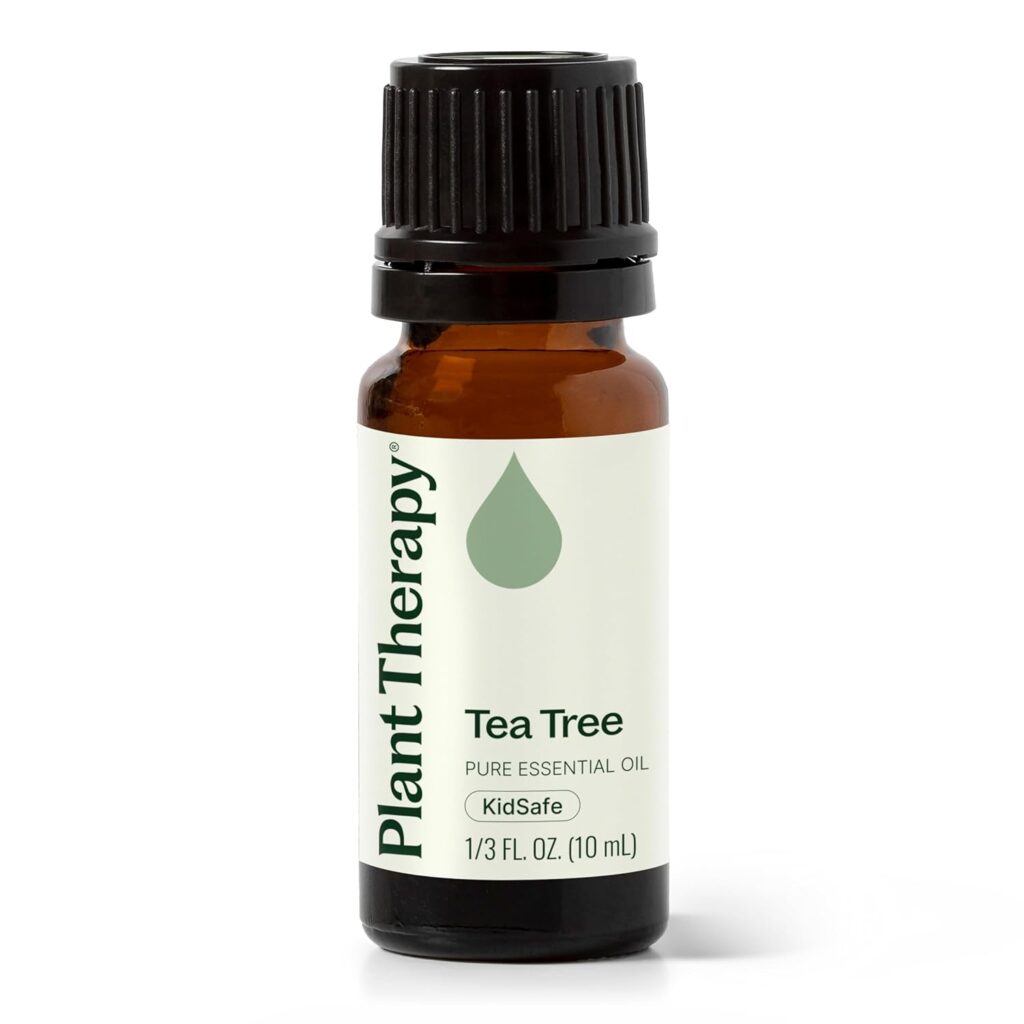
A favorite among essential oil users, Plant Therapy offers a steam-distilled, 100% pure tea tree oil that’s independently tested for quality. It comes with a convenient dropper for precise application and is a great choice for DIY nail treatments.
How Long Does Tea Tree Oil Take to Work?
Patience is essential.
Even if the fungus is no longer active, damaged nails need time to grow out.
Most people won’t notice a visible improvement for at least:
- 6 to 8 weeks for early changes
- 3 to 6 months for noticeable improvement
- 6 to 12 months for a healthy toenail to fully replace the damaged one
Toenails grow much more slowly than fingernails, so don’t expect overnight results.
Tips for Better Results
Tea tree oil works best when combined with good nail hygiene.
Here are a few habits that can improve your chances of success:
- Keep feet clean and dry.
- Wear breathable shoes.
- Change socks daily.
- Disinfect nail clippers after every use.
- Avoid walking barefoot in public locker rooms and pools.
- Treat athlete’s foot if you have it, since it often spreads to the nails.
- Replace old shoes if they’ve been repeatedly exposed to fungal infections.
These simple habits help reduce reinfection while your nail heals.
Common Mistakes to Avoid
Many people give up too early or unknowingly reduce the effectiveness of treatment.
Avoid these common mistakes:
- Applying tea tree oil inconsistently.
- Expecting results within a few weeks.
- Using the oil on dirty or wet nails.
- Not trimming thick nails.
- Sharing nail tools with others.
- Ignoring fungal infections on the surrounding skin.
- Continuing to wear damp socks or tight shoes.
Are There Any Side Effects?
Tea tree oil is generally safe for topical use, but it isn’t suitable for everyone.
Possible side effects include:
- Redness
- Burning
- Itching
- Dry skin
- Allergic contact dermatitis
Always perform a patch test before using tea tree oil regularly.
Never swallow tea tree oil, as it can be toxic if ingested.
Can You Mix Tea Tree Oil with Other Ingredients?
Some people combine tea tree oil with other natural oils that also have mild antimicrobial properties.
Popular carrier oils include:
- Coconut oil
- Olive oil
- Sweet almond oil
- Jojoba oil
While these oils help moisturize the skin and dilute tea tree oil, there’s limited scientific evidence that combining natural oils significantly improves cure rates.
When Should You See a Doctor?
Natural remedies aren’t always enough.
See a healthcare professional if:
- More than half the nail is infected.
- Several nails are affected.
- The nail becomes painful.
- The infection spreads quickly.
- You have diabetes or poor circulation.
- There is swelling, redness, or pus.
- You’ve tried home treatment for several months without improvement.
Prescription antifungal medications generally have much higher cure rates than tea tree oil, especially for moderate and severe infections.
Frequently Asked Questions
Does tea tree oil kill nail fungus permanently?
It can kill fungal organisms in laboratory studies, but permanently curing nail fungus is much more difficult. Complete cures with tea tree oil alone are relatively uncommon, especially in severe cases.
Can I apply tea tree oil directly to my nails?
Many people do, but pure tea tree oil may cause irritation. Diluting it with a carrier oil is generally safer, particularly if you have sensitive skin.
How often should I use tea tree oil?
Apply it once or twice daily for several months. Consistency is essential because nails grow slowly.
Can I use tea tree oil with prescription antifungal medication?
In many cases, yes. Some people use tea tree oil alongside prescription treatments, but it’s best to consult your healthcare provider before combining treatments.
Final Thoughts
Tea tree oil is one of the better-known natural remedies for nail fungus, and there’s legitimate science showing it has antifungal activity. However, that doesn’t mean it’s a guaranteed cure.
If you’re dealing with a mild infection, using tea tree oil consistently, maintaining good foot hygiene, and being patient may help improve your nail’s appearance over time. But if the infection is severe, painful, or continues to spread, prescription antifungal treatment remains the most effective option.
The key is setting realistic expectations. Tea tree oil may support healthier nails, but lasting results require consistency, proper nail care, and plenty of patience.
